

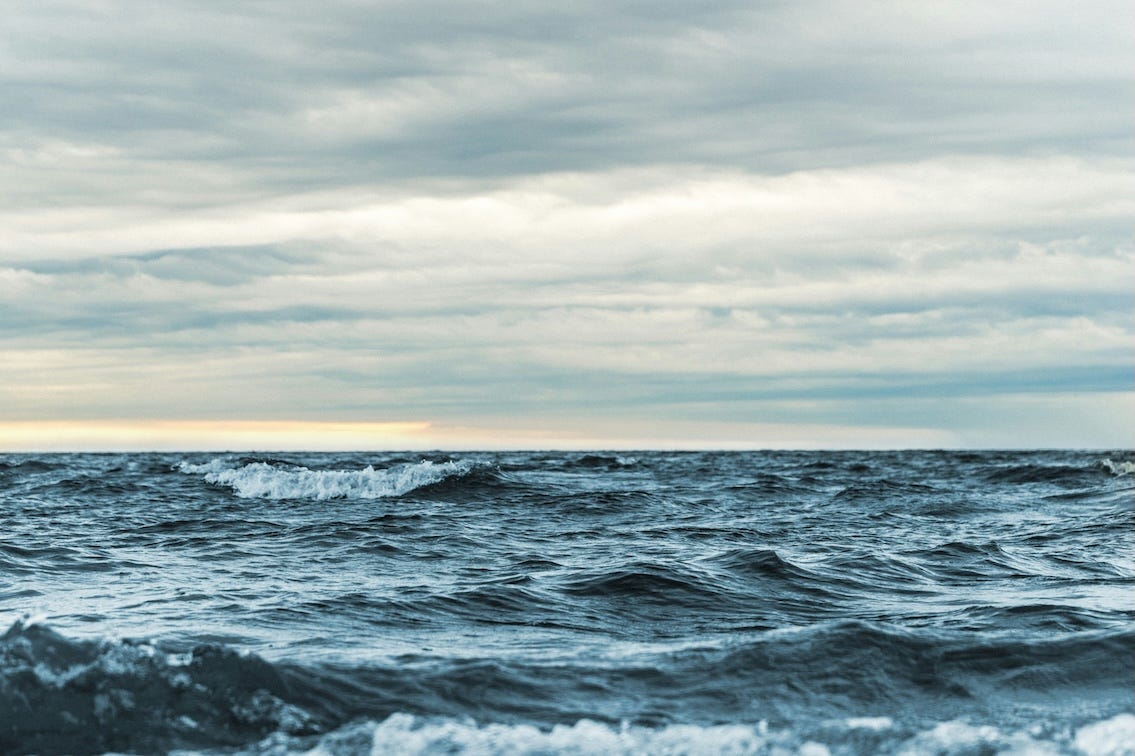
I’ve been thinking a lot about rhythm lately; not productivity or discipline, but the quieter pattern beneath them, the one you don’t invent so much as learn to recognize. It’s like the ocean in that way. You don’t command it, and you don’t rush it, but if you pay attention long enough, you begin to understand when to move and when to stay put.
I’ve been under the weather lately. It’s nothing dramatic or worthy of turning into a story about endurance and grit, but it has been enough to remind me that the body keeps its own tides. Add the holidays to that, with their noise and obligations and the strange expectation that you should be resting and producing at the same time, and I found myself facing a familiar choice. I could force myself into the water and paddle out no matter how rough it felt, or I could wait and trust that the conditions would change.
Waiting is rarely easy, especially for writers. There’s a particular anxiety that sets in when you’re standing on the shore watching wave after wave roll through, convinced that if you don’t go now, you’ll miss the one that mattered. We tell ourselves that momentum is fragile, that the work will disappear if we don’t chase it, and so we exhaust ourselves fighting currents we should have respected. The result is usually the same: tired sentences, blunt edges, writing that ends up coming across like effort rather than effortless movement.
This time, I chose to stop. I paid attention to my limits instead of negotiating with them, and I let myself rest without turning that rest into a problem to solve. I trusted that whatever was working its way through me needed time to gather, to shape itself, to become something worth riding when the moment came. That kind of trust doesn’t come easily, but experience has taught me that the best work I’ve ever done has almost never come from force. It comes from timing.
Life does its work in you the way the sea works the shoreline, gradually and without asking permission. It loosens what needs to be loosened, smooths what’s been made too sharp, and leaves things behind that you couldn’t have planned for. You don’t notice the change wave by wave, but step back far enough and the landscape is different. When you allow that process to happen, the work that follows carries more weight, because it’s been shaped rather than rushed.
Black Coffee took a short break during this stretch, not because it was abandoned, but because it needed to stay just offshore for a while. Stories don’t respond well to being dragged forward, and they rarely reward impatience. When I wait for the water to open up instead of charging every swell, the work meets me with more generosity and more clarity than when I demand it show up on command.
I’m starting to feel better now, clearer and more settled, and with that comes the familiar pull toward the water, not out of guilt but out of desire. That distinction matters. I’m hoping to step back into Black Coffee this week from that place, where the timing feels right and the movement carries me rather than the other way around.
There’s a quiet faith required in all of this: faith that rest isn’t failure, that waiting on the shore doesn’t mean you’ve missed your chance, and that letting life set the rhythm doesn’t weaken the art but deepens it. Sometimes the most important thing you can do for the work is to stop paddling, watch the water, and trust that when the wave comes, you’ll know.
Thank you for sharing. This resonated with my state of mind this past week. I wasn’t ill of anything, but writing’s been more difficult than usual.
So I sat. Thought. Read. And this morning took notes of ideas that came to me in that time. The themes of my new novel, the deep why’s.
I’m ready to move forward.